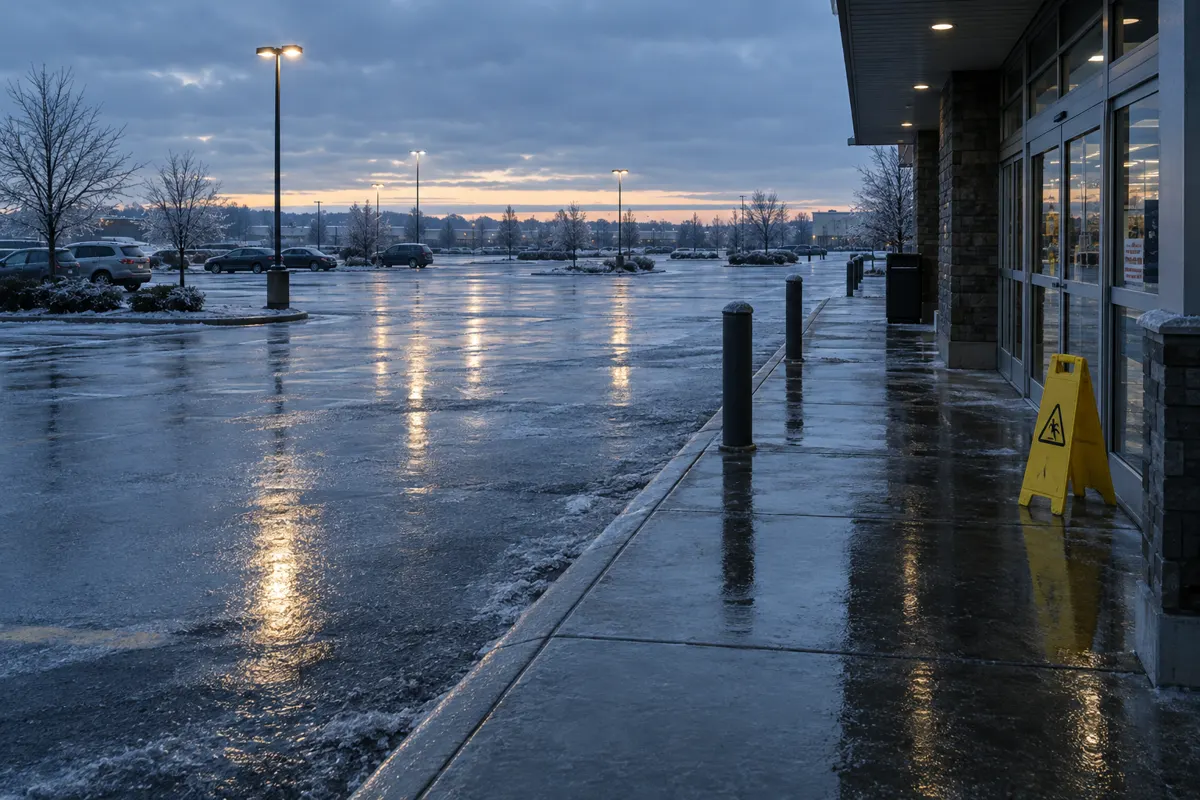
Premises liability cases involving ice and snow often hinge on timing. Many jurisdictions apply a storm-in-progress doctrine or consider whether the owner had a reasonable time to clear a hazard. The key facts are when precipitation started and stopped, when surfaces froze, and whether melting and refreezing created ice after the storm ended.
Dr. Banks builds an hour-by-hour weather timeline at the specific location and explains, in plain terms, how and when the hazard likely formed.
Questions a forensic meteorologist can answer
- Was a storm still in progress at the time of the fall?
- When did precipitation begin and end at the site?
- Could black ice or refreeze have formed after the storm?
- How much snow or ice had accumulated?
- Were surface temperatures below freezing?
- Was freezing drizzle or light precipitation occurring unreported?
Records and data used
- Hourly ASOS and AWOS observations and Local Climatological Data
- Cooperative observer and CoCoRaHS snowfall and precipitation reports
- NEXRAD radar for precipitation type, start, and end times
- Road weather and pavement sensors where available
- NWS winter weather advisories, warnings, and forecasts
- Sunrise, solar exposure, and temperature trends affecting melt and refreeze
Typical matters
- Parking lot and sidewalk falls at retail and commercial properties
- Apartment and HOA premises liability
- Snow removal contractor disputes
- Municipal and public property claims
- Workplace injuries on icy surfaces
Frequently asked questions
What is the storm-in-progress doctrine?
In several states, a property owner generally is not required to clear snow or ice while a storm is still ongoing, and has a reasonable time afterward. Whether a storm was in progress at the time of the fall is a factual weather question a meteorologist can address with hourly data.
Can a meteorologist prove black ice was present?
A meteorologist can show whether conditions supported black ice formation, such as moisture on the surface with air and surface temperatures at or below freezing, and when those conditions began. Direct observation of the specific surface usually comes from other evidence.