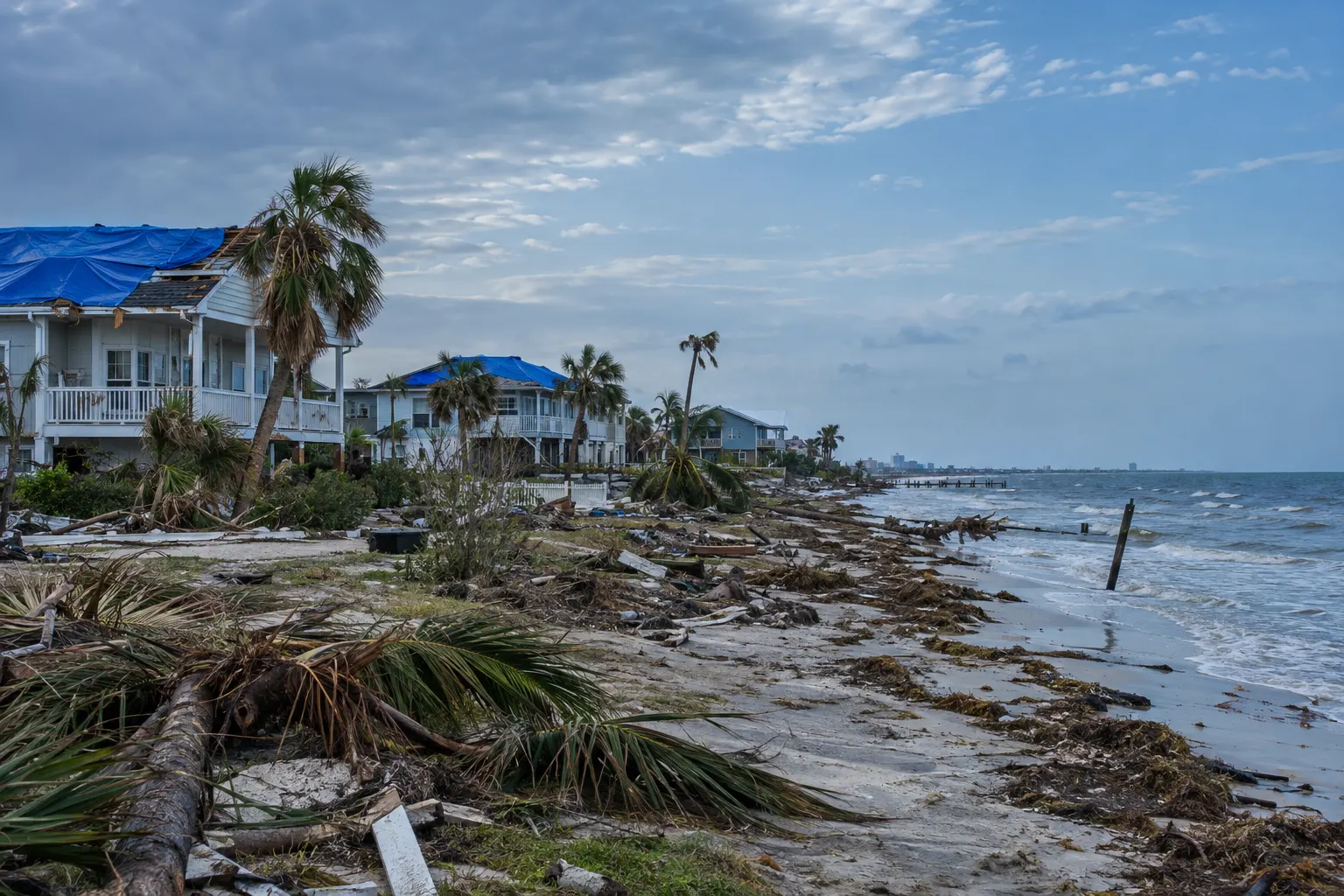
Hurricane claims and lawsuits frequently turn on causation and sequence: did wind damage the structure before storm surge or flooding arrived, and how strong were the winds at that specific location? Coverage often differs sharply between wind and water.
Dr. Banks works with tropical cyclone track and wind-field data professionally, including catastrophe-model validation against the historical record, and applies that to site-specific reconstructions.
Questions a forensic meteorologist can answer
- What were the peak sustained winds and gusts at the property?
- When did damaging winds begin relative to surge or flooding?
- How high was the storm surge, and when did it arrive?
- How much rain fell, and how quickly?
- Was the property inside the radius of maximum winds?
- Were tornadoes embedded in the hurricane rain bands?
Records and data used
- NHC best-track data and tropical cyclone reports
- Surface observations, buoys, and research wind networks
- Doppler radar velocity data for wind estimates aloft and near the surface
- Tide gauges and high-water mark surveys for surge
- Rainfall analyses and gauge data
- Historical tropical cyclone records for context and frequency
Typical matters
- Wind versus water coverage disputes
- Commercial and residential hurricane claims
- Business interruption and contingent loss
- Construction and building-performance litigation
- Marine and port damage
Frequently asked questions
Can you separate wind damage from storm surge damage?
A meteorologist can establish the timing and intensity of wind and the timing and height of surge at the site. Combined with engineering evidence, that sequence is often decisive in wind-versus-water disputes.
How do you estimate wind speed where no station survived?
By combining nearby observations, radar velocity data, the storm’s best-track position and structure, and established wind-field relationships, with an explicit range of uncertainty.