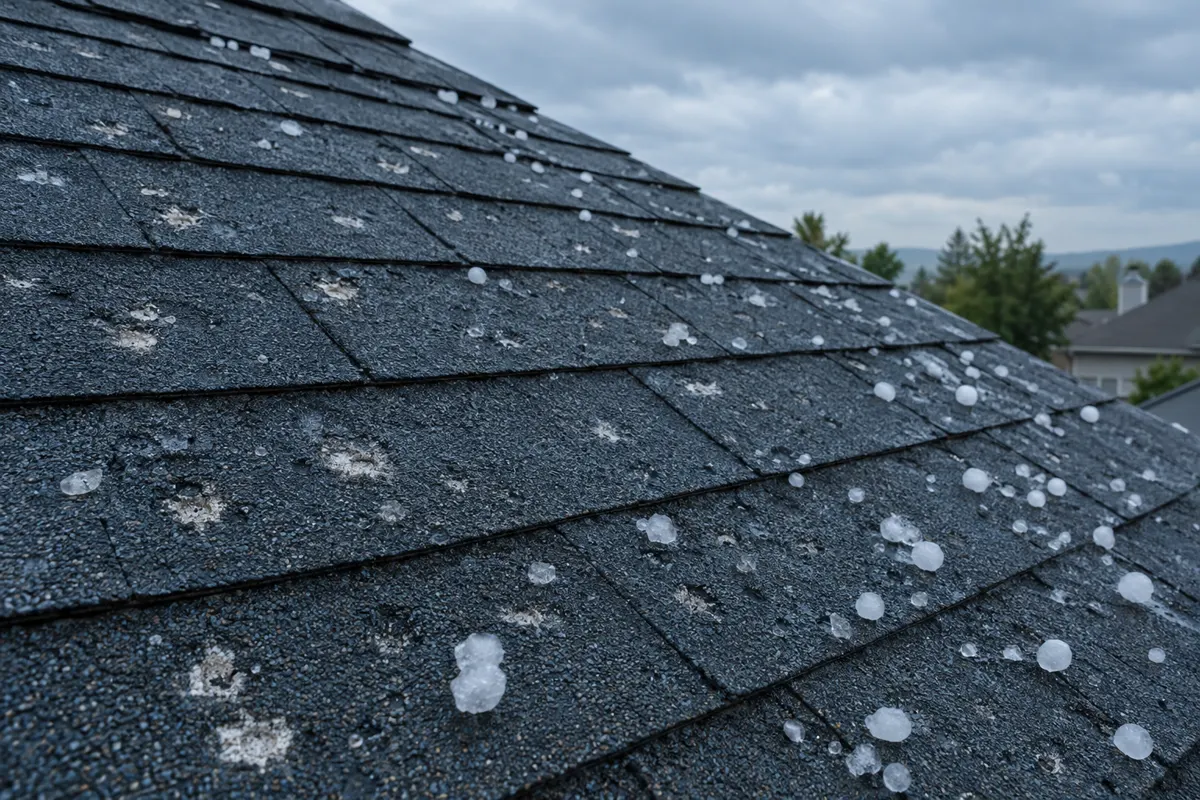
Hail and wind claims are among the most frequently disputed property claims. The questions are rarely whether a storm occurred in the region, but whether it produced damaging hail or wind at the specific roof in question and on the date claimed.
Dr. Banks has built storm-history pipelines from NOAA and SPC records and uses radar-derived hail and wind products to evaluate events at the address level, including searching an entire policy period when the date of loss is unknown.
Questions a forensic meteorologist can answer
- Did hail fall at the property, and how large was it?
- Which dates in the policy period had damaging hail or wind?
- What was the likely peak wind gust at the site?
- Was a tornado or downburst responsible?
- Is the claimed date of loss consistent with the weather record?
- Could the damage be from an older event?
Records and data used
- NEXRAD radar and MRMS maximum estimated hail size (MESH)
- SPC storm reports and NOAA Storm Data
- NWS damage surveys and local storm reports
- Surface observations and mesonet wind gusts
- GOES satellite for storm evolution
- Historical hail and wind climatology for the location
Typical matters
- Residential and commercial roof claims
- Date of loss disputes and late-reported claims
- Appraisal and umpire proceedings
- Bad-faith and coverage litigation
- Contractor and public adjuster disputes
Frequently asked questions
Are radar hail estimates reliable?
Radar-derived hail estimates such as MESH are useful but imperfect. They are most reliable when combined with ground reports, observations, and storm structure analysis. A good report explains those limits instead of relying on a single radar product.
Can you analyze several possible dates of loss at once?
Yes. A date of loss study reviews the full history at the property for the policy period, ranks the candidate events, and explains the evidence for each one.