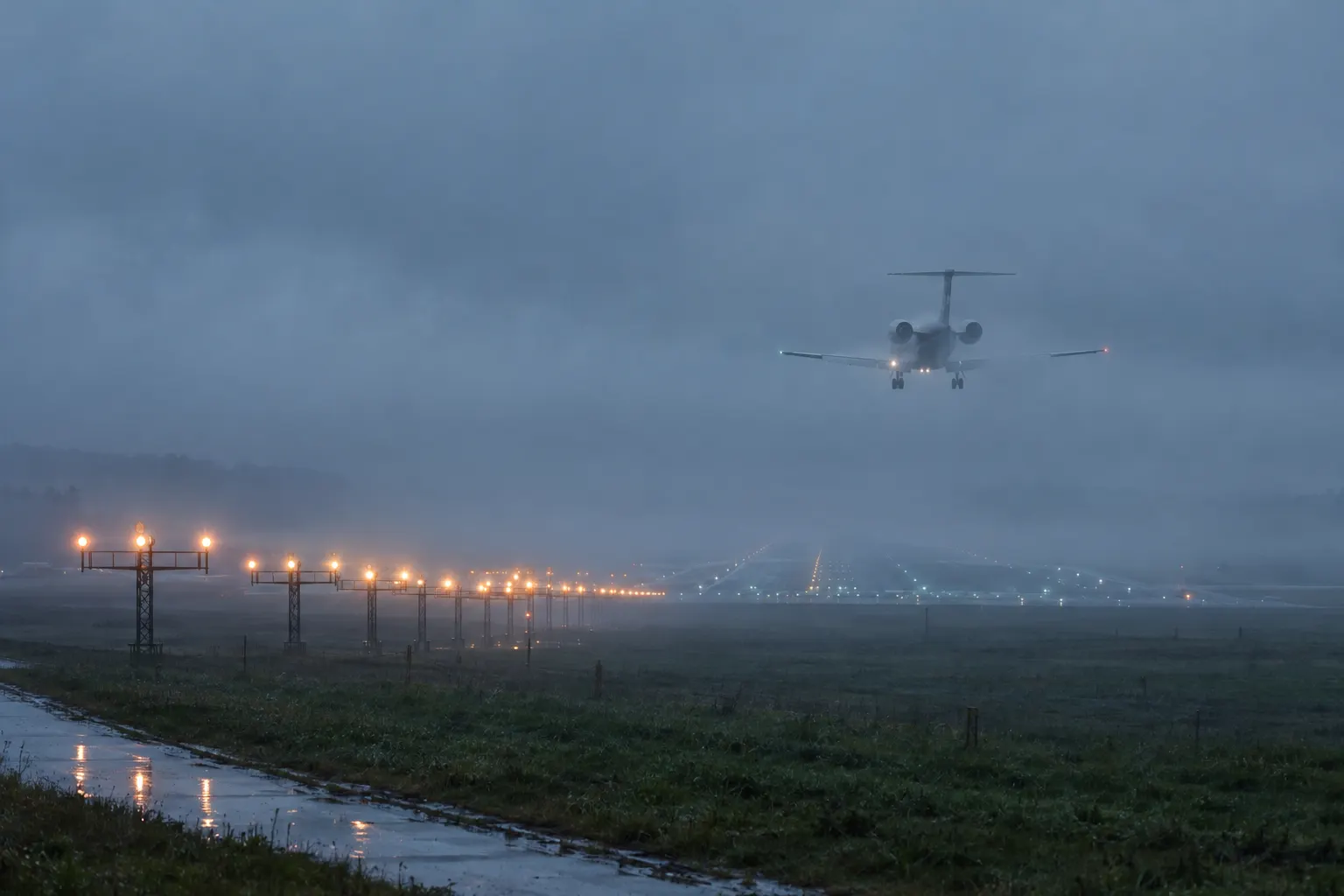
Weather is a contributing factor in a significant share of general aviation accidents and many commercial incidents. These cases usually turn on two questions: what conditions actually existed along the route and at the airport, and what weather information was available to the pilot, dispatcher, or controller before and during the flight.
Dr. Banks has a background in aviation weather, including certification covering aviation meteorology and private-sector work on turbulence intelligence for airlines. He reconstructs conditions minute by minute and compares them with the forecasts, advisories, and briefings on record.
Questions a forensic meteorologist can answer
- Were ceilings and visibility below approach or VFR minimums?
- Was icing or turbulence present at the flight altitude?
- Was wind shear or a microburst likely on approach or departure?
- What did the forecasts, AIRMETs, SIGMETs, and PIREPs say?
- Was the weather briefing complete and accurate?
- Could the hazard have been seen on radar or satellite in real time?
Records and data used
- METARs, SPECIs, and TAFs for departure, destination, and alternate airports
- AIRMETs, SIGMETs, convective SIGMETs, CWAs, and PIREPs
- NEXRAD radar and GOES satellite imagery along the route
- Upper-air soundings and model data for icing, turbulence, and winds aloft
- Archived graphical forecasts and briefing products
- NTSB docket weather factual reports, reviewed and independently verified
Typical matters
- General aviation and business aircraft crashes
- Commercial turbulence injury claims for passengers and crew
- Helicopter and air medical accidents
- Runway excursions in wet, icy, or gusty conditions
- Aviation insurance coverage disputes
Frequently asked questions
Do you review the NTSB weather factual report?
Yes. The NTSB docket is a starting point. Dr. Banks reviews it critically and independently checks the underlying data, which sometimes supports a different or more detailed picture of the conditions.
Can you determine what weather information the pilot received?
The meteorologist can reconstruct what forecasts, advisories, and observations were available at the time of a briefing or in flight, and compare them with the actual conditions. What the pilot actually reviewed is usually established through other evidence.