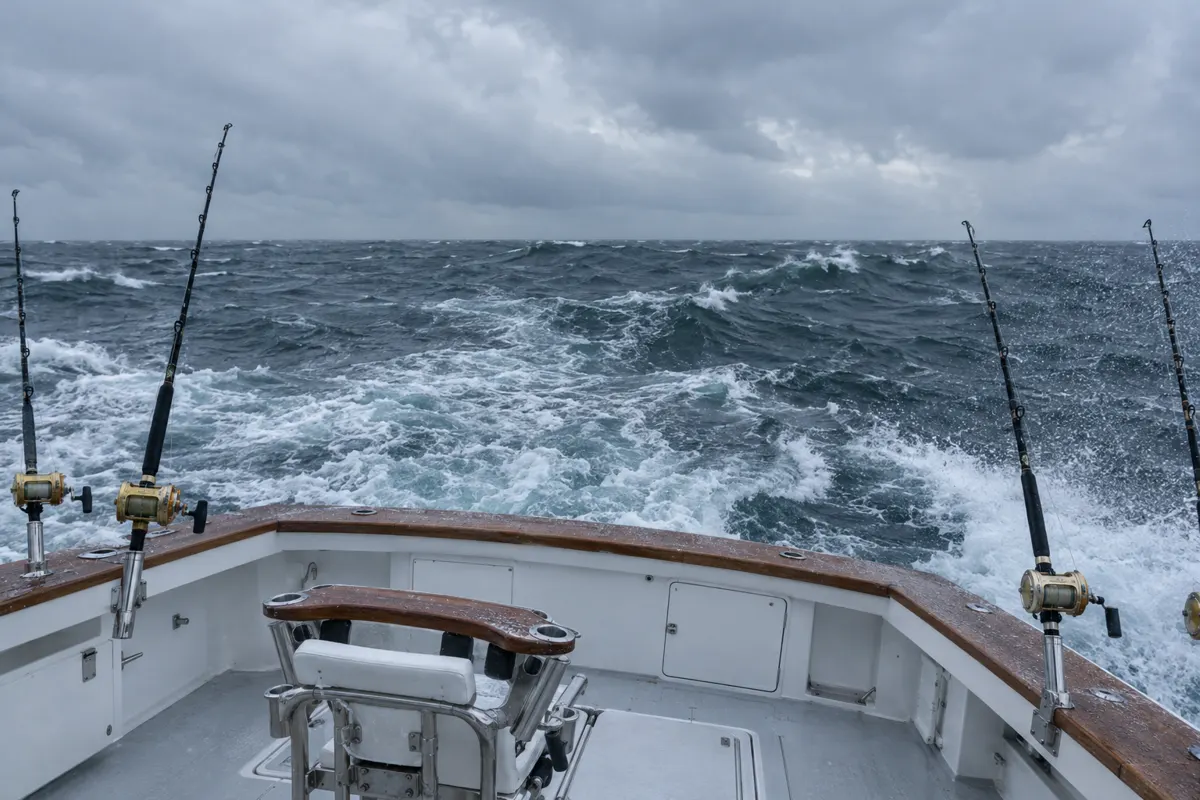
In maritime injury, Jones Act, and vessel casualty cases, testimony about a sudden large wave or unexpected seas is common. A marine weather expert can test those accounts against measured data, estimate significant and maximum wave heights at the incident position, and assess whether conditions were forecast.
Dr. Banks combines buoy data, satellite altimetry, and operational wave models, and cross-validates them against each other so the estimate does not rest on a single distant instrument.
Questions a forensic meteorologist can answer
- What were the significant wave height and wave period at the position?
- How large could individual waves reasonably have been?
- What were the wind speed and direction?
- Were small craft advisories or marine warnings in effect?
- Did forecasts give the operator reason to delay or cancel?
- Was visibility restricted by fog or rain?
Records and data used
- NDBC buoys and C-MAN coastal stations
- Satellite altimeter measurements of wave height and wind
- NWS coastal and offshore marine forecasts and warnings
- WAVEWATCH III and nearshore wave model output
- Tide gauges and current data
- Vessel logs, AIS tracks, and witness positions placed in context
Typical matters
- Passenger injuries on charter, party, and excursion boats
- Jones Act and maritime crew injury claims
- Collisions, groundings, and capsizing
- Offshore operations and cargo damage
- Marine insurance and hull claims
Frequently asked questions
Can you estimate wave height far from the nearest buoy?
Yes, with stated uncertainty. Satellite altimeter passes, wave models, and multiple buoys can be combined and compared to estimate conditions at the incident position, which is often more reliable than relying on one distant buoy.
What is the difference between significant and maximum wave height?
Significant wave height is roughly the average of the highest one-third of waves. Individual waves can be larger, and the expected maximum depends on duration and sea state. Explaining that relationship correctly is often central to marine testimony.