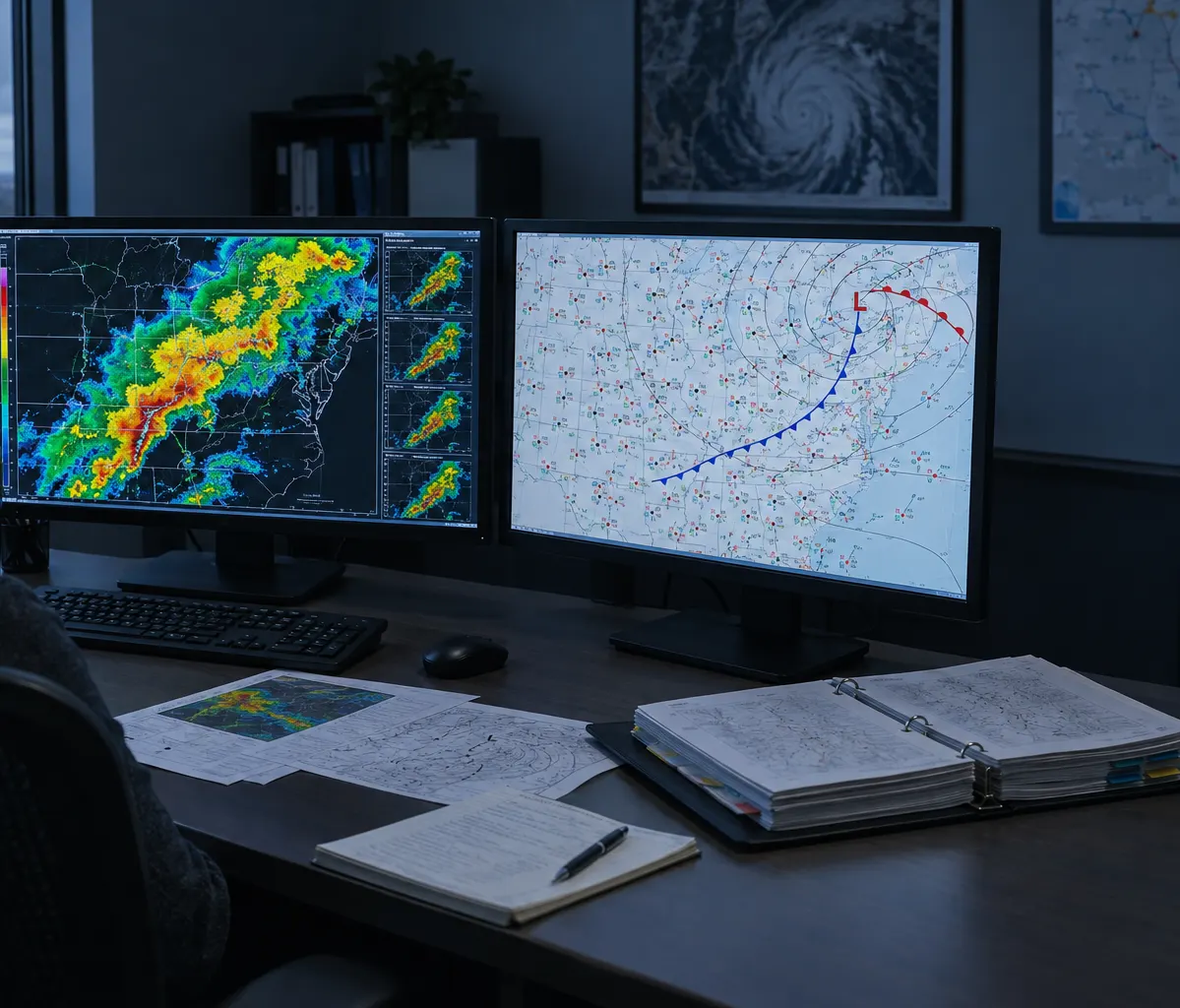
Flooding disputes often ask whether rainfall was extraordinary or within what a design, drainage system, or contractor should have anticipated. Rainfall can vary dramatically over short distances, so a single gauge miles away may not represent the site.
Dr. Banks combines radar-estimated rainfall with gauge reports to estimate totals and intensities at the location, and compares them with published precipitation frequency estimates.
Questions a forensic meteorologist can answer
- How much rain fell at the property, and over what period?
- What was the peak rainfall intensity?
- How rare was the event compared with historical return periods?
- Was the event forecast, and were flood warnings issued?
- Did rain on prior days saturate the ground?
- Could the storm be considered an act of God?
Records and data used
- Stage IV and MRMS radar-estimated precipitation
- NWS, cooperative observer, and CoCoRaHS rain gauges
- NOAA Atlas 14 precipitation frequency estimates
- Flood watches, warnings, and forecasts
- USGS stream gauges, where relevant
- Antecedent rainfall and soil moisture context
Typical matters
- Construction delay and weather-day disputes
- Drainage, stormwater, and design litigation
- Water intrusion and roof leak claims
- Flood insurance and coverage disputes
- Force majeure and act of God defenses
Frequently asked questions
What is a 100-year storm?
A 100-year storm has about a 1 percent chance of occurring in any given year at a location, for a specific duration such as 24 hours. It does not mean it happens only once a century. Explaining return periods correctly is often important in flooding cases.
Can you support weather-day claims in construction disputes?
Yes. A day-by-day record of rainfall, temperature, wind, and other conditions at the project site can be compared with contract thresholds for weather days.